Measuring for a Blind to Fit Inside the Window Recess (Recess Size)
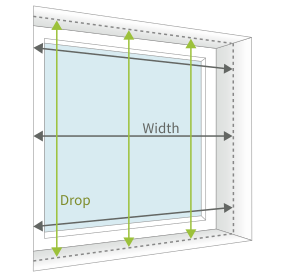
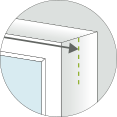
Using a metal tape measure (cloth ones can stretch), measure the width of the visible window frame at the top, middle, and bottom of the frame.
Record the narrowest measurement.
Next, measure the height (drop) of the visible window frame at both sides and in the middle.
Record the smallest measurement.
You don’t need to make any deductions; we’ll do that for you to ensure you get the best fit.
Top Tip for Roller Blinds:
For roller blinds, you only need to measure the width at the top of the recess. This is because the fabric is narrower than the overall width of the blind, which includes the controls and brackets.
Top Tips for Measuring Inside the Window Recess

Check that your window recess is deep enough for the blind to fit inside. Make sure to consider any obstructions inside the recess, such as handles.
Below are the depths required for each type of blind to fit fully inside the recess:
Roller Blinds Face-Fix - 70mm
Roller Blinds Top-Fix - 50mm
25mm Real Wood & Faux Wood Blinds - 55mm
35mm Real Wood & Faux Wood Blinds - 55mm
50mm Real Wood & Faux Wood Blinds - 65mm
25mm Aluminium Venetian Blinds - 30mm
Roman Blinds - 50mm
Vertical Blinds - 75mm
Day & Night Roller Blinds Face-Fix - 75mm
Day & Night Roller Blinds Top-Fix - 55mm
Obstructions Inside the Window Recess
If there are tiles (or other obstructions such as dado or picture rails) inside the recess, the distance between these is likely to be the narrowest part of the recess. Measure between the tiles to get your recess width.
Top Tip for Roller Blinds:
For roller blinds, it is slightly different. Measure the width at the top of the window recess and also the width between the tiles. If the difference between these two measurements is less than 30mm, use the top measurement for your ‘recess size’. If the difference is greater than 30mm, deduct 5mm from the width between the tiles and select the option ‘fabric size’ when placing your order.
Top Tip for Blackout Roller Blinds:
To ensure as little light leakage as possible around the edges of the blind, we recommend fitting blackout blinds outside the window recess wherever possible.
Measuring for a Blind to Fit Outside the Window Recess (Exact Size)
To measure for a blind intended to fit outside the window recess, we recommend an overlap of 10cm to each edge, as shown in the illustration.
Measure as for a recess fit (above) and add 20cm to each measurement.
If the windowsill protrudes far enough to obstruct the blind, only add 10cm to the height (drop) and allow the blind to sit on the sill.
Top Tip for Roller Blinds:
The overall width of a roller blind, including its controls and brackets, is approximately 34mm wider than the fabric width (43mm wider for a day & night roller blind). So, you can either choose ‘exact size’, which means we will make the blind to your exact sizes from bracket to bracket, or you can choose ‘fabric size’.
Measuring for a Replacement Blind
If you already have an existing blind and want to replace it with one of the same size, measure the width (including any brackets or fittings) and the height (drop) and choose ‘exact size’ when placing your order.
Bay Window Measuring Guides
Click on your relevant bay window type below to view our easy to follow measuring guide.

 Samples (0)